
CULTIVATING INDEPENDENCE THROUGH NATURE
Program design for the people who take kids outside.
My name is Scott Shepherd and Wildward Institute is the culmination of work I've done in education and conservation for 15+ years. As a dad, practitioner, educator, and outdoor veteran, I help schools, camps, and conservation programs to make meaningful experiences academically impactful for learners of all ages. My work aims to design programatic leaders who communities stand behind and attract funders to support.


THREE VANTAGE POINTS. ONE PRACTICE.
I've done this work from every seat at the table
Most outdoor ed consultants have run programs or taught and guided. It's rare to find someone who's done all three, and that's the point of Wildward Institute.

Field Practitioner
I've ran and led outdoor, environmental, and adventure programs for over a decade. I've built the curriculum, hired the staff, and been the one kneeling in the dirt with countless kindergarteners.

Educator
I have experience teaching both in and outside the classroom across K-12 grade levels. I know what it's like to navigate logistics on a rainy Tuesday with twenty-six kids who are cold, tired, and hungry.

Outdoor Veteran
I have experience in guiding, conservation, and back-country experience that informs how I think about risk, gear, logistics. I know the moments when quiet competence is just what kids and parents need.
SELECTED WORKS
Recent Engagements & Program Builds.

Leadership in Action
I ran three afterschool programs at Title 1 High Schools in San Diego County.
While each school was different, demographically, geographically, and culturally, they all had one thing in common: parents were afraid of their kids spending time outdoors.
For some, spending time outdoors was considered lazy, or not in alignment with their goals for academic and economic success. For others, exploring other parts of San Diego County was foreign and sending their kids on adventures meant getting lost, or hurt. Still others simply didn't trust our organization, we hadn't formed the relationships we needed to be seen as trusted and supporting adults.
So I worked with local school officials to host parent info nights, hosting hundreds of parents and kids with hot dogs and hamburgers in hand. While we grilled and fed the community, we presented our program model, the rigorous training our staff underwent, and explained our risk management procedures. We modeled equipment and activities that we would use to engage youth while shaking hands and literally speaking the language of the community whether Arabic, Spanish, Somalian, or Vietnamese.
Through this experience, we learned the value of building trusting relationships with the community through culturally responsive practices and speaking to the values of the students we hoped to serve.
The result? We expanded our programs to be 100% at capacity, tripling our individual youth served, and identifying student leaders in the process.

An Unexpected Pivot
I started working with California State Parks on March 9th of 2020.
Two days later, the world shut down and I was told to go home with no expectation of coming back. But our mission didn't end there, we needed to find a way to maintain access to the outdoors despite the impacts of the pandemic.
Within 72 hours, I had built a new website, a new platform, and an online TV channel connecting 1,000 viewers per broadcast, six times a day, five days a week to parks all across the state.
This laid the groundwork to scale the California State Parks PORTS program to serve more students and expand to parks all across the state. But there was one problem: State Parks Interpreters didn't know how to connect with their audiences through a screen.
So I packed up the car with my five-year-old and drove.
Eight weeks across California. Teaching California State Parks staff the power of using technology to continue engaging K-12 students from home. This empowered staff members to remain essential workers despite the objective barriers to access the pandemic had put in place. All while camping, swimming, hiking, and biking with my kindergartener, all across the state.
This experience taught me to speak to the values of staff and hold space for their fears, trepidation, and disbelief that screens could serve a positive purpose to connect with kids learning at home. That year we served over 100,000 students and inspired kids and their families to get outdoors.

Reimagining the K-12 School Field Trip
She shouted “I can’t innovate if my basic needs aren’t being met!”
I was interviewing interpreters with California State Parks to “reimagine the school field trip” and make existing programs more impactful when I ran into an unexpected challenge.
Staff were spending 40% of their time, every single week, answering back-and-forth emails just to schedule one single field trip.
Not teaching. Not designing programs. Not doing the work she loved.
Scheduling, for 16 hours a week.
I was new. I had no supervisory authority over them. I couldn't tell them to do anything differently.
So I didn't.
Instead, I went back to basics and focused on their needs.
For the next 90 days I built a forward-facing booking system that let teachers reserve a field trip the same way you'd book an Airbnb.
Simple. No back-and-forth. No inbox full of confirmations.
That fall, a year's worth of programs booked in less than 24 hours.
That freed them up to do the thing they were hired for: connecting young people to nature, history, and culture.
Within 12 months, the number of students served increased by 500%.
Not because we hired more staff. Not because we got more funding.
Because we focused on their needs, and build efficiencies to support them.
The lesson I've carried into every organization I've worked with since:
Capacity isn't always a staffing problem.
Sometimes it's a systems problem wearing a staffing disguise.
WHO I WORK WITH
Three audiences. One through-line: quantified and scalable success.
Institutions
Schools, camps, park districts, and nonprofits running place-based or field programs — and the directors who need a thought partner who's actually done the work.
-
Program audits & strategic planning
-
Curriculum design & staff training
-
Program Evaluation Design and Implementation
-
Fundraising Support
Professionals
You're an aspiring or seasoned professional who's passionate about their work but trepidatious about their next move. Join 1:1 coaching sessions or a larger community of practice to expand your skills and network.
-
1:1 Coaching
-
Join our community of practice
-
Book and Gear Recommendations
IN THE FIELD - THROUGH THEIR WORDS
From the people I've worked alongside


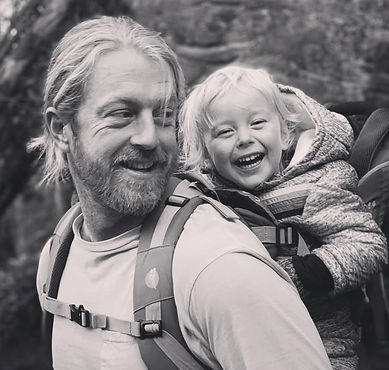
A practitioner turned consultant
Scott Shepherd
FOUNDER, WILDWARD INSTITUTE
As a father of three, surfer, and burrito aficionado based in Santa Cruz, I am an outdoor environmental education consultant with 15+ years of experience in the field. I work to bridge the gap between conservation expertise and classroom pedagogy by helping your staff deliver programs that engage students and produce data that funders trust.
"The goal isn't to rebuild the wheel, it's to make meaningful experiences academically impactful."